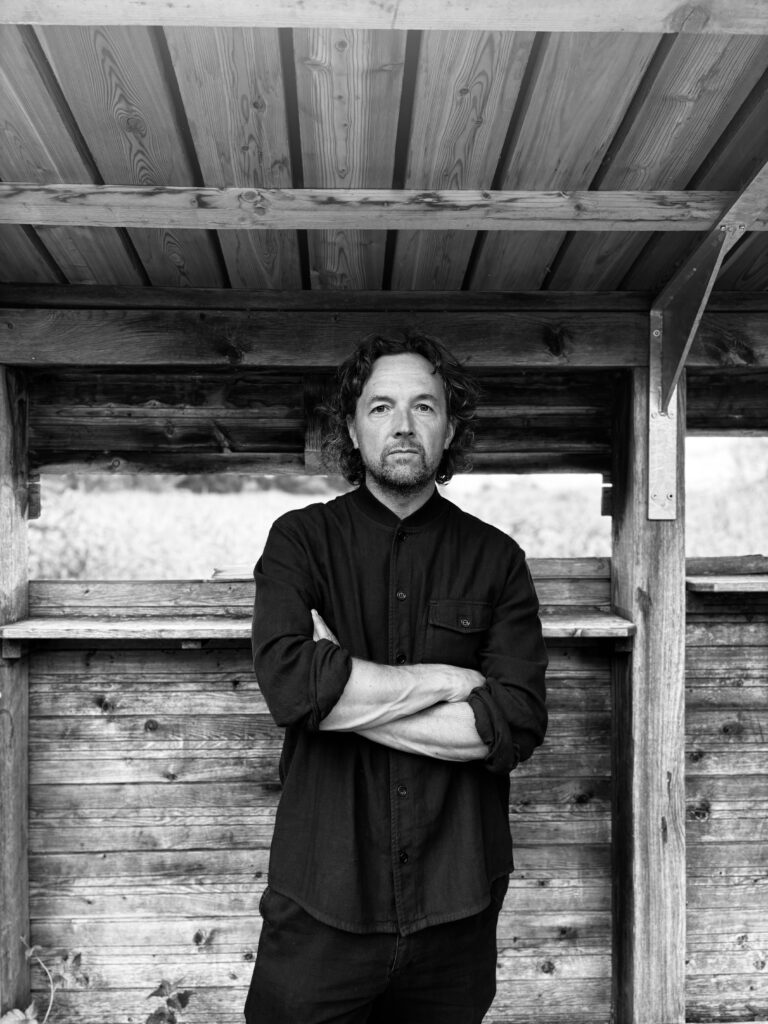
From one of our most talented artists and writers, The Birdwatchers is a novel about the risks and rewards of stepping out of your comfort zone, and about the hope of truly being understood by someone else. The Birdwatchers tells the story of Jean, a lonely young man stuck in a routine life in a perfect Swiss city. His world changes when he becomes interested in a woman he sees on his daily commute. Trying to get closer to her, Jean pretends to be interested in birdwatching and joins her group of friends. As Jean learns about birds, he starts to see the world—and himself—differently. Phil M. Shirley, Foreshore Publisher, said: ‘The Birdwatchers is a remarkable work from someone I consider to be a vital writer – Alan’s writing captures the spirit and concerns of our time, on a raw human level. The Birdwatchers takes us to the heart of the matter – how hard it can be to make real connections with others in a world full of screens and routines. It is a novel that will impact and inspire. The Birdwatchers will be published by Foreshore Books, the small press department of Foreshore Publishing, in spring 2026. AJ Lawson is an award-winning artist and writer of Scottish–Spanish descent. His paintings are held in private and public collections, including his portrait of the late poet John Burnside, which hangs in the Scottish National Portrait Gallery. He is co-founder and co-director of The Alpine Fellowship, a nonprofit foundation supporting the arts. His writing has appeared in literary journals such as Studies in Photography, American Arts Quarterly, and Bare Hands Poetry Magazine, and he was shortlisted for the 2014 Bridport Poetry Prize.
“Sometimes I wonder if bilingualism is its own form of magical realism. What else would you call it when your mouth has to translate your heart?” Writer Marie Anne Arreola discusses how bilingual writing blends emotion, identity, and rhythm, and her upcoming debut novel, Sparks of the Liberating Spirit Who Trapped Us back in Woodstock. Interview by Betsy Robinson Image Jr Korpa @ Unsplash What inspired you to write a work of magical realism? How did the plot come to you? It started with a question I couldn’t let go of: What do we owe the past versions of ourselves who never got closure? I didn’t sit down thinking I’d write magical realism. I was trying to find a shape for all the memories that didn’t follow a straight line. The novel grew out of that, like emotional archaeology, digging through layers I didn’t realise were still there. That’s where the metaphor came from, too: a man returns to Woodstock, a place he thought he’d left behind, for a funeral—and ends up confronting the ghosts he’s carried with him, both real and imagined. It didn’t feel like I was inventing the story. It felt like I was recovering it. What did the writing process look like for Sparks of the Liberating Spirit Who Trapped Us Back in Woodstock? It was fragmented, and surprisingly tender. I started with texture, tone, and dialogue because of my background in screenwriting. I discovered the heart of the characters through their voices. That gave me the urgency to keep going. In fact, once I found that rhythm, I finished the first draft in one month. Writing this novel often felt like returning to the page not to produce, but to listen. The characters came to me as composites—part film characters from stories I admire, part versions of myself I no longer am. I built them from scraps, like assembling memories as a way to return again and again to the same emotional question. Does your novel reference the Woodstock festival? Not exactly. The idea of Woodstock came to me through my poem of the same name, which won the WILDSOUND Festival’s Nature category last year. That poem never left me. It was the first heartbeat of the novel. In Sparks, Woodstock is both a place and a metaphor. It’s where timelines blur, where the past and the present sit across from each other and talk. It’s a space where the main character, Johnatan, is forced to confront what could’ve been; not just in his life, but in the lives of those he’s lost. I also became obsessed with the way the word ‘Woodstock‘ sounds like ‘wood stuck‘. That small glitch in language opened a hidden passage for me: an invisible bridge between the literal and the emotional. That’s where the story lives. How did you incorporate your poem Woodstock into the novel? The poem was the doorway. It was atmospheric, surreal, and emotionally precise. Writing it taught me that memory doesn’t operate in linear time. It moves like weather, drifting, gathering, dissolving. That became the emotional logic of the novel. Some lines from the poem echo in the first part of the book, especially in Johnatan’s reflections on loss. Not always directly, but in feeling. I believe poems leave residue: emotional traces that don’t fade. The poem became a kind of compass. It reminded me to trust the luminous, strange aspects of grief. It also gave me permission to let nostalgia carry weight, to let it pull the narrative like a tide. Does writing in Spanish versus English affect the style of your writing? Absolutely. Spanish is where I keep my tenderness, my earliest memories, my family stories. English is where I keep my ambition, my edges, my academic self. Writing between the two means I’m constantly translating—yes, words, but also entire ways of thinking and being. That tension shows up in how my sentences curve, in the rhythm of my metaphors, in the way I play with sound and double meanings. That’s why I’m drawn to wordplay. Sometimes the slippage between two similar-sounding words opens up an unexpected meaning. It feels like I’m tracing an invisible etymological history; a secret logic that connects ideas beneath the surface. That’s where my poetic and linguistic instincts meet. I wonder if bilingualism is its own form of magical realism. What else would you call it when your mouth has to translate your heart? I don’t write in one language. I write through both. The dialogue in this novel, for example, emerged in English, not by choice, but by frequency. I grew up consuming so much English-language media, especially theatre and film, that often my characters start speaking in English before I even know who they are. That’s probably why dialogue is the backbone of my work. I follow it the way a poet follows meter. It’s all about rhythm. The rhythm tells me when the story is alive. How has it felt to expand from writing short stories and poetry to writing a novel? Poetry taught me how to compress emotion, how to make a sentence burst. Short stories taught me voice and urgency. But the novel asked something I wasn’t used to: stamina. Not in terms of speed, but in terms of attention. I had to sustain a feeling (this deep, subtle emotional tone) across 40,000 words without diluting it. At first, that was terrifying. But what carried me was the sense of responsibility I felt toward the characters once I understood how alive they were. I wasn’t just crafting a plot but becoming a vessel for their synthesis. I didn’t want to resolve them. I wanted to walk with them. Author’s Note This book is part of a larger conversation about what it means to be a hybrid writer in today’s world. As a Mexican poet publishing in London, I’m keenly aware of how rare and crucial that position is. We need to make space for it, not as a box to check, but as a necessary evolution in literature. Publishing this
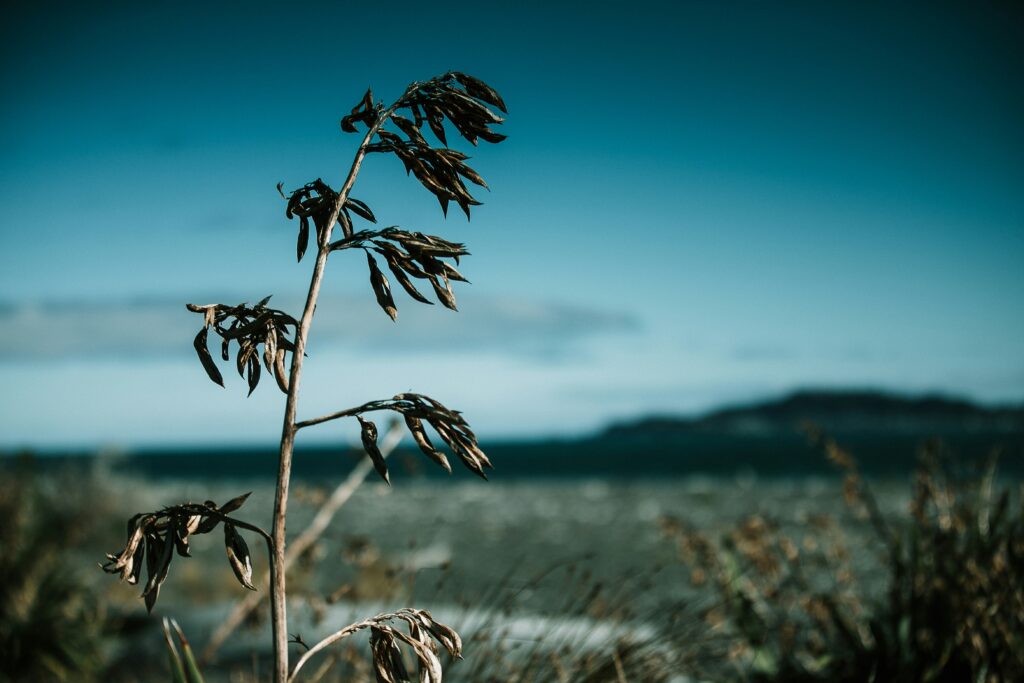
“I think that there’s a thread running through all my books and I don’t think that I’m alone in this: Who can you trust?” : novelist Alison Jean Lester discusses interacting with nature as a writing prompt, retreating to Finland , and her upcoming book, FLAX: The Legend of Tula. Interview by Betsy Robinson Main Photo by James Coleman on Unsplash How did you find the process of creating a whole new world? “I never imagined doing that. My writing so far has always been contemporary, and reality-based. Modern relationships. So, when I realised that this was the way the story needed to be written, I went with it, and it turned out to be one of the most wonderful experiences of my life. I love the world. I love Rakana. It required that I go to different parts of my mind. If I’m writing about a typically domestic situation, then I’m in a country that I know. I’m just drawing from a large area of experience. Whereas for this, I felt like I needed to be a funnel for anything in my life that was going to be relevant. I didn’t know where it was necessarily going to come from. So that was a very different feeling in my brain. And I’m pointing outwards, because that’s what it feels like, but of course it’s all inside. When I started writing this book, there was a walk that I would do through a flax farm. Normally, when I walk through a field, I think my thoughts. But when I walked through that farm, I was responding to the farm. From that came all of my questions. My mind flits around a lot, and it was really wonderful to have a place to go that was constantly changing and interesting, and I had to really observe.” How did you find writing new words? “Well, this kind of links to your question about how my life of living in many places and travelling a lot affected the writing. My experience in China was deeply formative; I went to live in China as an exchange student when I was 19 years old. It changed my life forever. I don’t know where my character Tula came from, but Lixut and Jenla and Yonghet came from fooling around with Chinese names. “After I thought about the book for a year, I did a retreat in Finland. I knew I wanted to be in a place where I did not know the culture, and I had to be observant, and I had to feel, because Tula has to leave her country. We were in the countryside of Finland and a lot of the farmers don’t speak English so it was a very quiet experience, which was perfect for me. I went down to the river one day, for the bit where I needed to write Tula waking up by the river. I went down to the river, and I lay down by a tree, and then, opened my eyes. And what was next to me? What were the flowers that were there? What was going on in the landscape? What is it like to wake up in a place like this? I’ve never slept by a river; I was able to engage with the landscape there. Finnish is not similar to very many languages. So, names like Eikala, that’s not a Finnish word, but it kind of sounds like one. “The artist retreat had communal studios, but I needed to write alone, and I was told ‘Well, we have this loft.’ They opened this old door, and it was a big loft with creaky floors and interesting things stored in there, like sculptures and drawings and weaving materials, and then there was a window looking out on a river. And there was an old schoolroom desk. So, I sat at this little desk with a view of a river, and I just kind of received what wanted to be received, what could attach itself to the story.” Were you inspired by any real-world places or other fictional worlds? “When I lived in Japan, I had a friend who was a cloth dyer and an advisor for fashion brands. I was invited to a wedding, and I was pregnant with my second child, so I had nothing to wear. My friend made me a tunic, it was very simple, but it was absolutely beautiful. I bet that had an impact on the book: the undyed linen with my ‘Undyed’ characters. In terms of fictional places, I don’t generally read made-up worlds, other than Terry Pratchett. Although there is one book that probably gave me some courage, and that I’d highly recommend. It’s called Sharp Teeth by Toby Barlow. It is a story of modern-day werewolves in LA, and it’s a poem.” What would you say are the main themes of your new book? “I think that there’s a thread running through all my books and I don’t think that I’m alone in this: Who can you trust? That is the question and that is an eternal question, so we’ll all keep writing about it. In this case, it’s the Rakanans who haven’t questioned the situation and are just trusting. But when Tula steps out of the bubble, the question is ‘who can I trust?’ I think that’s a central theme. The book is a physical journey, as well as an emotional journey. “The writer Jim Cace read the beginning of my book and said, ‘I couldn’t help but read it as elevated prose rather than a story in verse. I see these as paragraphs rather than stanzas.’ For me, it’s not an effort to be poetic. It’s an effort to guide the feeling, to guide the reading, and to make you pause when the moment deserves a pause, or to feel Tula hesitating as time is passing. The book is a lot about texture, but it’s also about the senses. “I hadn’t even thought that the book