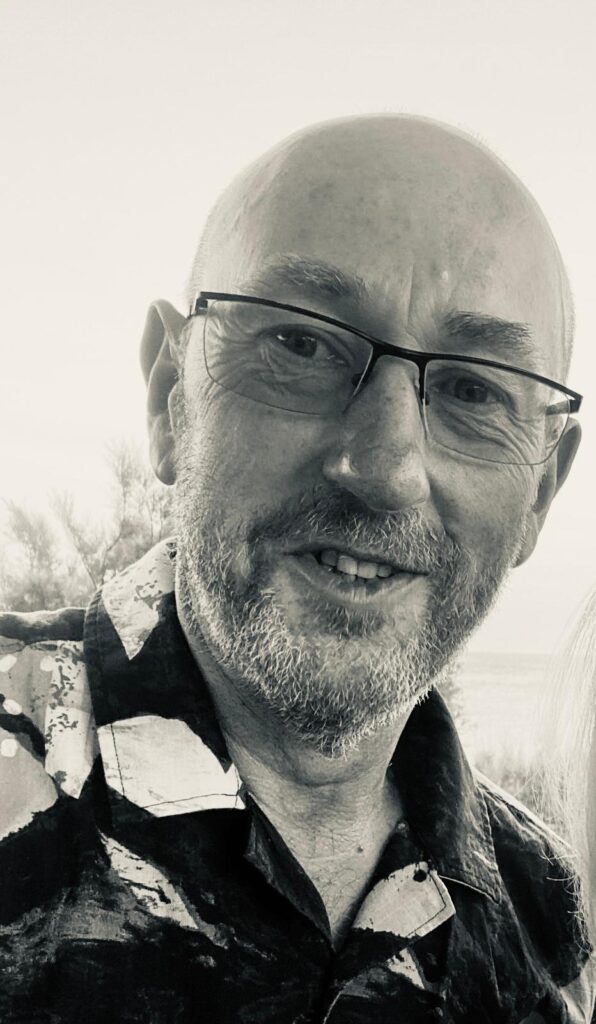
From the director known for work on The Avengers (1998), Solo: A Star Wars Story (2018), and The Batman (2022). Foreshore Books Announces The Green Man, a New Supernatural Horror Thriller by Mark Woollard — Coming Autumn 2026. Foreshore Books, the small-press imprint of Foreshore Publishing, is excited to announce the upcoming release of The Green Man, a chilling new supernatural thriller that draws on one of Britain’s oldest and most intriguing myths. Set in the deep forests of southern England, The Green Man follows John Turner, an ex-soldier seeking quiet work and recovery far from his past. But when a series of disturbing incidents begins near an ancient Iron Age site, Turner finds himself pulled into a mystery that unsettles both locals and investigators. As old symbols, forgotten histories, and buried emotions resurface, Turner discovers that the forest holds far more than legends — and that the past, both personal and ancient, is not as distant as it seems. The story unfolds with creeping dread, blending psychological tension with mythological mystery as Turner is drawn into events he cannot ignore. Joined by journalist Lowry Warner and historical theologian Peter Howell, he must confront forces that defy explanation and a darkness that seems to wake with every step deeper into the woods. Phil M. Shirley, Publisher at Foreshore Books, said: “The Green Man is a gripping, atmospheric thriller — a modern story woven through with ancient echoes. Mark Woollard brings a cinematic depth to the page that horror and mystery readers will love.” About the Author Mark Woollard is a British writer and director with a forty-year career in film and television. He has contributed to many major franchises, including Harry Potter, Star Wars, Tim Burton and Christopher Nolan’s Batman films, as well as the Marvel universe — and even a James Bond film. Woollard was mentored by the late legendary producer Gerry Anderson (Thunderbirds, Space: 1999), with whom he developed television projects and co-wrote Anderson’s final feature-film script. He is currently directing an animated feature scheduled for release in 2027. The Green Man will be published by Foreshore Books in Autumn 2026.

“Kiwi took over — I simply followed.” Roger Emms’ controversial, fearless and unsettling novel About Your Daughter. Interview by Phil M. Shirley It was a mild, perfectly typical autumn afternoon when I met Roger Emms in the crowded Waterstones café on Gower Street, a short walk from his London home. The pavements were damp from a brief, forgettable shower; students drifted in and out with tote bags and half-formed essays; and the low hum of people sheltering among books created its own warmth. Briefly back from Grenada, Roger settled easily into a corner table—composed, observant, with the quiet intelligence of someone who has spent a lifetime watching people. He speaks the way he writes: measured, unhurried, uninterested in superficialities. His debut novel, About Your Daughter, is as fearless and unsettling as the mind behind it. For thirty years, Roger has lived in the Caribbean, a place that quietly permeates his work. Before turning to fiction, he led a substantial professional life: founding a London-based healthcare research and consultancy organisation working across Africa, Southeast Asia, the Caribbean, and the Middle East on reproductive health, HIV/AIDS policy, and other conversations governments often struggle to have. He has also worked in a children’s psychiatric hospital and supported a home for abused children. It is the kind of CV that could sound pious or self-important in the wrong hands. Roger does not perform gravitas; he states facts, then moves on. About Your Daughter did not begin as a novel intending to provoke. It began, he tells me, with a tree. “I started with the silk cotton tree I know well,” he says. “A real tree, overlooking the harbour where the slave yards were. I imagined a girl—Kiwi—talking to it, consulting its age and wisdom. That was the story.” He pauses, amused. “Then Kiwi took over. And I let her.” What followed is a daring work of literary fiction that inhabits the inner life of a pre-teen girl on a Caribbean island—her imagination, private desires, confusions, fantasies, vulnerabilities, and power. The silk cotton tree becomes her confidante, a gateway to a more complicated understanding of herself. Roger enters territory most writers avoid altogether, or approach only from a safe adult distance. He refuses both. Kiwi’s story, he explains, grew from three preoccupations rooted in his long-standing interest in child psychology and the blind spots of adulthood. “There’s this idea,” he says, “that parents understand their young daughters—or even want to. But they often know very little about what’s actually happening in their children’s emotional or imaginative lives. Sexual development frightens people. They close the door on it and pretend the child has closed the door too.” In About Your Daughter, Kiwi’s world becomes a site of collision: innocence and agency, fantasy and danger, curiosity and transgression. Roger avoids didacticism, offering no warnings, lessons, or endorsements. Instead, he attempts something bolder and harder—an act of attention. He tries to understand a young girl’s consciousness from the inside. “In literature,” he says, “young girls are often narrated by adults who want something from them. Or they’re moralised into symbols. What interested me was: what if Kiwi told her own story? What if we listened to her voice without cleaning it up?” Nabokov inevitably comes up—not as a model to imitate, but as a literary problem to answer. “Dolores Haze didn’t get to tell her own story,” Roger says. “We only heard Humbert Humbert’s version. I wanted to imagine the girl who does get to speak, unfiltered. What would she insist on? What would she hide? What would she misunderstand? What would she exploit?” Kiwi is portrayed not through an adult gaze of scandal or titillation, but through the shifting perceptions of a child trying to map unfamiliar impulses onto a world that offers her almost no guidance. She is naïve and knowing, vulnerable and manipulative, tender and—at times—cruel: contradictory in the way real children are, though adults rarely admit it. “She fascinates me,” Roger says, “not because she’s a symbol, but because she’s a child trying to make sense of adult behaviour she doesn’t yet have the tools to interpret.” The novel also confronts the blindness of adults—their desire not to know. Kiwi’s parents, and the parents of her friends, move through the book with a touching and dangerous obliviousness. “Intergenerational silence,” Roger calls it. “We pretend not to see what we fear. But that doesn’t mean the child isn’t thinking—or acting.” This uneasy mixture of misunderstanding and power is one of the novel’s most unsettling elements. Roger describes it calmly, without melodrama. “The stereotype is the older man exploiting the young girl,” he says. “But that isn’t the whole story. Children can be exploitative too—not because they’re wicked, but because they’re inexperienced, impulsive, emotionally uneven, and sometimes more powerful than they realise.” About Your Daughter does not ask the reader to approve of anything. It asks only that they stay in the room—to resist flinching away from the discomfort of childhood interiority. Was it difficult to write? “I didn’t think it would be publishable,” he says with a small shrug. “I was writing it for myself. And for Kiwi.” Most major UK literary agencies turned it down, which he took as a promising sign. “Algorithms,” he says, with a grim smile. “They like the predictable. Kiwi’s mother says the industry is full of sharks and cannibals. She was probably right—though she didn’t know about the robots.” Foreshore Publishing, he adds, was the first publisher to read the manuscript as literature rather than a problem. “I wanted an independent publisher who wasn’t terrified of a difficult book,” he says, “who understood what it was actually doing.” He looks around the packed café and smiles. “People underestimate readers. They underestimate what fiction can hold. Kiwi’s story isn’t written to shock—it’s written to make you think differently about what children know, and what they hide.” When our conversation ends, the café has grown louder, the light outside beginning to fade. Roger buttons his coat, thanks me politely, and
FORESHORE STILLWATER Stillwater is an imprint of Foreshore Publishing. Mission Statement Stillwater publishes thoughtful, accessible non-fiction that supports inner growth, emotional resilience, and conscious ways of living. Our books explore the deeper currents of human experience—where psychology meets spirituality, and where reflection leads to meaningful change. We are drawn to work that is grounded, humane, and expansive: books that offer clarity without dogma, insight without urgency, and guidance without prescription. From personal growth and mental health to travel, mindfulness, and contemplative wisdom, Stillwater titles invite readers to slow down, look inward, and engage more fully with themselves and the world. Editorial Scope & Boundaries What We Publish Stillwater welcomes non-fiction that aligns with one or more of the following areas: Personal Growth & MindsetBooks that cultivate self-awareness, emotional intelligence, confidence, purpose, and clarity. Mental Health & Emotional ResilienceThoughtful, supportive works addressing anxiety, grief, trauma, burnout, and healing—written with care, responsibility, and respect for readers’ wellbeing. Mindfulness & Slow LivingTitles encouraging presence, rest, balance, and more intentional ways of living in a fast-paced world. Consciousness, Psychology & Inner InquiryWorks integrating modern psychology or neuroscience with contemplative traditions, self-inquiry, or philosophical exploration of the mind. Mysticism & Non-DualityGrounded explorations of spiritual experience, oneness, and contemplative insight, written for a broad, curious readership. Travel, Culture & Ways of LivingNarrative or reflective non-fiction exploring place, culture, and alternative ways of engaging with life and the natural world. New Age & Alternative PracticesConsidered explorations of meditation, indigenous wisdom, energy practices, or metaphysical ideas—presented with discernment, context, and ethical awareness. What We Do Not Publish To maintain clarity and trust with readers, Stillwater does not consider: Purely instructional “quick-fix” or hustle-driven self-help Works promoting harmful, misleading, or medically irresponsible claims Content that discourages evidence-based mental health care Dogmatic, proselytising, or exclusionary spiritual writing Highly technical academic texts written primarily for specialists Political manifestos or overtly partisan works Fiction, poetry, or children’s books (handled by other Foreshore imprints) Submission Guidelines Stillwater is open to submissions from both established and emerging writers whose work aligns with our mission. What to Submit Please include: A proposal (Word or PDF), including: Overview and central premise Target readership How the book fits within the Stillwater imprint Author background and relevant experience Brief marketing and positioning notes Sample material 1–3 chapters or up to 10,000 words Estimated word count and current status of the manuscript What We Look For A clear, compassionate authorial voice Depth, nuance, and originality of thought Practical insight balanced with reflection Cultural sensitivity and ethical awareness Writing that is accessible without oversimplifying complex ideas Platform is helpful but not essential; we are most interested in clarity of vision, quality of writing, and resonance with readers. How to Submit Submissions should be sent to:submissions@foreshorepublishing.com Please include “Stillwater Submission” in the subject line.Due to volume, we regret that we can respond only to submissions under active consideration.