
I’ve spent more than twenty years working as a GP and medicine has been a hugely rewarding career. Over time, though, I reached a point where I felt the urge to try something completely different.
The idea of writing a novel began with a very simple question: could I actually do it? I’ve always been an avid reader, particularly of thrillers, but writing one myself felt like a huge leap into the unknown. In fact, there was a twelve-month gap between first thinking about it and finally sitting down to start.
Once I began, I quickly realised how much I enjoyed it. The process became surprisingly addictive, it was a case of the more I wrote, the more I started to think that perhaps I really could write a book.
What Can’t Be Unseen, draws heavily on the world of medicine. What sparked the idea for the story?
Like many thrillers, it started with a “what if?” question.
In my work as a GP, I see many patients living with chronic pain and pain is incredibly complex; there’s the physical element, but also a significant psychological component. In medicine we often rely on medication to manage it and while those treatments can help, long-term use can bring serious side effects, including dependence and addiction.
That reality led to a fictional scenario. What if someone discovered a painkiller that worked perfectly without addiction or side effects? It sounds like the perfect solution but then another question arises: what lengths might someone go to in order to create it?
That idea became the foundation of the novel and ultimately takes the readers of a journey into some very dark territory.
Without giving too much away, what can readers expect from the story?
It’s a fast-paced thriller that explores themes which feel very relevant today. The story begins within the medical world but expands into areas where innovation, ambition and morality intersect in dangerous ways.
As events unfold, the reader is drawn into the murky territory of unethical pharmaceutical practices and eventually into something even darker: human trafficking.
At its heart, though, the novel is designed to keep readers turning pages while also raising questions about the ethical boundaries of medical science and the consequences when those boundaries are crossed.
Tell us about the protagonist, James Harland. Who is he?
James Harland is a doctor who finds himself pulled far beyond the normal boundaries of medical practice.
Readers follow him as he becomes involved in a dangerous investigation that becomes deeply personal. As events escalate, he’s forced into situations that challenge his understanding of medicine, ethics and even his own character.
Watching his development was one of the most rewarding aspects of writing the book. By the end of the story he has changed significantly, learning difficult lessons about the world around him and about his own strengths and weaknesses.
Your medical background clearly influences the book. How much of the clinical side comes from real experience?
Quite a lot of it, particularly the emotional and practical realities of medical practice.
There are moments of genuine clinical action in the novel, including a scene where Harland leads a resuscitation. That chapter was one of the quickest to write because the experience felt very familiar. Situations like that are something many doctors encounter during their careers.
Another aspect of medicine that influenced the story is uncertainty. In general practice you often work with incomplete information. Unlike hospital settings, you don’t always have immediate access to extensive tests or investigations, so you’re constantly piecing together small clues to form a bigger picture.
Harland approaches his investigation in much the same way by connecting fragments of evidence until the truth slowly emerges.
What about the other characters in the book? Are they based on real people?
Not directly. However, years of practicing medicine offers a fascinating window into human behaviour. Over the years I’ve encountered an enormous range of personalities, and you begin to recognise patterns in how people respond to pressure, fear or ambition.
While the characters in the novel aren’t portrayals of specific individuals, they are influenced by those observations. My aim was to create people who feel recognisable. For me, memorable characters are just as important as the plot and ideally readers finish the book wanting to meet them again and find out what happens next.
Many people imagine writing a novel to be daunting. How did you find the creative process?
Initially it was intimidating. My biggest worry was that I wouldn’t have any ideas.
Ironically, it was when I switched off from daily life that inspiration arrived, usually while I was out running. I run regularly in the countryside which turned out to be the perfect environment for ideas to form. More than once, I rushed back from a run and immediately jotted down plot ideas.
Do you see similarities between medicine and writing?
Surprisingly, yes. On the surface they seem like very different worlds, but they share some similarities.
Medicine uses frameworks and pathways to guide decision-making, and storytelling also has its own narrative structures that shape how a story unfolds.
But perhaps more importantly, both rely on intuition. Medicine is often described as a science, but in reality, it’s also an art and you develop judgement and instinct over time. Writing feels very similar with technical skills to learn, but a lot of it ultimately comes down to intuition and experience.
What do you hope readers take away from What Can’t Be Unseen?
I hope they enjoy the story and find it gripping!
Beyond that, I hope the characters stay with them. The best compliment would be if readers feel as though they’ve really met these people and are curious about what might happen to them next.
And will we see James Harland again?
Yes. A second novel is already well underway with several characters returning, including James Harland. We will also be introduced to new characters which I am sure readers will connect with.
Without giving too much away, I am really enjoying developing and exploring where the characters go next.
For a writer who once wondered whether he could write a novel at all, Mike Crisp’s answer is becoming increasingly clear. With What Can’t Be Unseen, he has transformed decades of medical experience into a compelling debut thriller, and with more stories already in progress, Dr James Harland’s journey is only just beginning.
GET AHEAD OF THE TRUTH – PRE-ORDER WHAT CAN’T BE UNSEEN NOW!
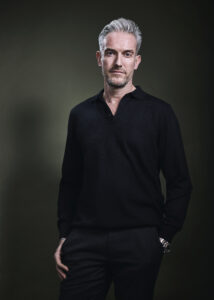
Michael Crisp is an NHS doctor with nearly twenty years’ experience. He draws on real clinical insight, rich character observation, and deeply human stories gathered over decades. His writing blends authenticity with pace, tackling topical issues through compelling characters. He now balances medicine with writing and is hard at work on his next novel, The Shadow Helix.